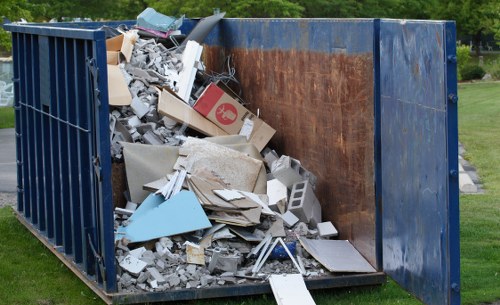
Commercial Waste Removal Camden — Health & Safety Policy
This Health and Safety Policy sets out how Commercial Waste Removal Camden manages the health, safety and welfare of employees, contractors and members of the public in delivering commercial waste services. The policy covers the full scope of commercial rubbish removal Camden operations, including collection, transport, temporary storage and onward transfer of non-hazardous and compliant hazardous streams. Our aim is to prevent injury and ill health, control risks from waste handling, and ensure safe site and vehicle operations across the rubbish company service area.
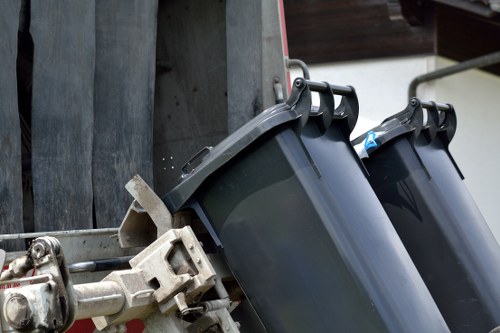 The policy applies to all staff, drivers, loaders, site operatives and third-party contractors engaged in Camden commercial waste services. It outlines duties at every level: senior management provide leadership and resources; supervisors ensure procedures are followed; employees are required to work safely and report hazards without delay. Risk assessment and method statements are central to how tasks are planned, and documented safe systems of work are maintained for regular and non-routine activities.
Risk Assessment, Training and Competence
Risks associated with commercial waste removal in Camden are routinely identified, assessed and controlled. The organisation commits to systematic risk assessments for lifting, manual handling, vehicle operations, vehicle loading and unloading, slippery surfaces, fly-tipping removal and interaction with the public. Training programmes cover manual handling, use of lifting aids, safe driving of refuse vehicles and incident reporting. Competence is reviewed at induction, periodic refresher training and via on-the-job supervision to ensure all operatives remain capable of working within the rubbish removal Camden safety framework.
PPE, Vehicles and Equipment
Personal protective equipment is provided where risks cannot be eliminated and is worn as required. Typical PPE includes gloves, hi-visibility clothing, safety boots, eye protection and respiratory protection where dust or fumes are present. Vehicles and plant used in commercial rubbish collection undergo scheduled inspections, maintenance and pre-start checks. Drivers and operators follow safe systems of work for loading, securing and transporting waste to reduce incidents of spillage, overturning or public exposure. Strong emphasis is placed on safe vehicle manoeuvring and reversing, with banksmen or reversing aids where necessary.
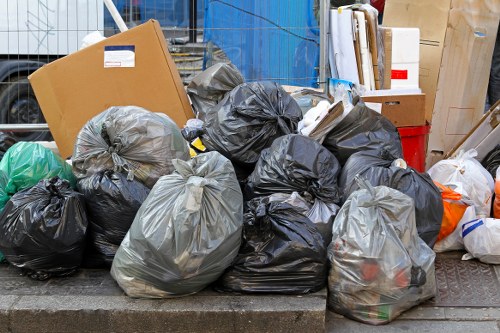
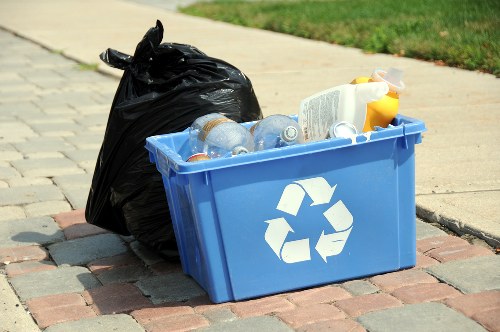
Waste segregation, labelling and handling procedures are enforced to manage the diverse materials encountered in commercial waste removal service areas. Non-hazardous, recyclable and hazardous-like wastes are segregated at source where possible, and any suspect hazardous material is isolated and managed by trained personnel. Permit-to-work or special handling protocols apply when dealing with chemical containers, asbestos-like materials or sharps. Records of waste movements, manifests and duty of care documentation are retained to demonstrate compliance and to support safe operations.
 Emergency preparedness, reporting and first aid arrangements are an essential part of this policy. All locations have clear incident reporting channels and instructions for contacting emergency services. First aid kits and trained first aiders are provided according to the size of the workforce and the nature of the activities. Spillage kits, fire extinguishers and emergency spill containment procedures are available to minimise harm to people and the environment in the event of accidents.
 The company implements regular monitoring, audits and performance reviews to ensure the policy is effective. Inspections are carried out on-site, on vehicles and at transfer locations to spot unsafe acts, defective equipment or deviations from procedures. Where deficiencies are found, corrective actions are taken promptly and learning shared across teams. Near-miss reporting is encouraged to capture potential hazards before they lead to injury.
Contractor management and site coordination are governed by clear arrangements to ensure safe integration of third parties into ongoing operations. Contractors are selected based on safety performance, competence and adherence to the same standards expected of in-house teams. Before work begins, briefings cover access controls, traffic management, exclusion zones and communication channels. The policy emphasises that everyone working on-site has the authority and responsibility to stop unsafe work and to escalate concerns without fear of reprisal.
Occupational health measures address the long-term wellbeing of staff engaged in waste handling. Routine health surveillance, vaccinations where appropriate, manual handling assessments and opportunities to report work-related health concerns are provided. Measures to control exposure to biological agents, dust and fumes include hygiene facilities, wash stations and guidance on safe handling practices for potentially contaminated materials.
Management review ensures the policy remains current and proportionate to operational needs across the commercial waste removal service area. Reviews consider incident trends, legislative changes, emerging hazards and feedback from workforce consultation. This policy is supported by operational procedures, risk assessments and training records and will be updated as necessary to sustain continuous improvement in health and safety performance throughout all commercial rubbish removal activities.